
Journal Records

 
By admin , 11 July, 2026

The relationship between the Jewish people and the Persians is among the oldest continuous interactions between two civilizations in world history. Unlike many imperial powers of the ancient Near East, the Persian Achaemenid Empire is remembered in Jewish historical memory not primarily as a conqueror but as a liberator and protector. This relationship began in the sixth century BCE with the conquest of Babylon by Cyrus the Great and continued, in various forms, through the Achaemenid, Parthian, Sasanian, and Islamic Persian periods, extending into the modern era.

By admin , 6 July, 2026

Sometimes, in the stillness of the night, in the midst of an unexplained anxiety, or within a pattern that refuses to leave us, we sense that something greater than our present life is stirring inside us. It feels as though an ancient shadow, an old wound, or an unfinished story from our family's past is still breathing within us. Many people call this ancestral karma—a poetic and mysterious expression suggesting that:
"Some of the burdens we carry are not ours alone; their roots reach back to years before we were born."
Perhaps there is truth in this.

By admin , 6 July, 2026

Educational cooperation plays a significant role in strengthening social ties between Iran and Hungary. Hungarian universities have hosted Iranian students in fields such as engineering, medicine, and humanities, while Iranian academic institutions have welcomed Hungarian researchers in Persian studies and archaeology. Scholarship programs, academic conferences, and student exchange initiatives contribute to the development of interpersonal networks that transcend national boundaries. These interactions help reduce cultural stereotypes and foster long-term social understanding.

By admin , 5 July, 2026

Few places on Earth have a history as deep and continuous as Susa, one of the world's oldest inhabited cities. Long before the rise of Rome, Athens, or even Babylon's greatest days, Susa stood as a thriving center of civilization in the fertile plains of southwestern Iran. For thousands of years, it served as a crossroads where cultures, empires, religions, and trade routes converged.

By admin , 5 July, 2026

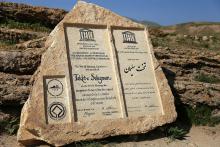
Nestled against the towering limestone cliffs of the Zagros Mountains in western Iran, Bisotun (also spelled Behistun or Bisitun) is one of the Middle East's most extraordinary archaeological landscapes. More than a single monument, Bisotun is an ancient cultural complex where imperial history, mythology, commerce, and religion intersect. For thousands of years, travelers, merchants, soldiers, and kings passed through this strategic gateway, leaving behind inscriptions, sculptures, temples, and memories carved into stone.

By admin , 5 July, 2026

For centuries, the ancient city of Istakhr (also spelled Estakhr, Stakhr, or Istakhar) stood as one of the most influential political, religious, and cultural centers of Persia. Although overshadowed today by the nearby ruins of Persepolis, Istakhr played a remarkable role in preserving Persian identity during some of the most turbulent periods of Persian history.

By admin , 4 July, 2026

Youth constitute one of the most valuable human resources of any nation, serving as the foundation for future scientific, cultural, economic, and social progress. When young people become involved in violent street confrontations, particularly in highly polarized political environments, the consequences extend far beyond immediate casualties and property damage. Such events can result in the irreversible loss of human capital, deepen societal divisions, weaken civil institutions, and delay national reconstruction and development.

By admin , 3 July, 2026

The illicit trafficking of ancient objects is one of the most serious threats to the preservation of cultural heritage worldwide. Archaeological artifacts are not merely valuable commodities; they are irreplaceable historical records that embody the identity, traditions, and collective memory of civilizations. The illegal excavation, smuggling, and commercial trade of antiquities result in irreversible losses to scientific research, cultural continuity, and national heritage.

By admin , 1 July, 2026

Iran's Generation Z, generally defined as individuals born between the late 1990s and early 2010s, has emerged as an influential social and political generation. Their aspirations have become increasingly visible through social movements, digital activism, and cultural expression. While the diversity of this generation makes broad generalizations difficult, survey data, academic research, and analyses of recent protest movements indicate recurring themes such as individual freedom, social pluralism, gender equality, secular governance, economic opportunity, and global engagement. These aspirations differ substantially from the ideology of the Mujahedin-e Khalq (MEK), an Iranian opposition organization founded in the 1960s